
Aluminium Cladding Cleaning in Dubai: What Every Building Manager Needs to Know
Aluminium cladding cleaning Dubai goes wrong more often than any other facade job. Moreover, the damage is usually permanent and expensive. Harsh chemicals strip the factory coating within minutes. Therefore, the method matters far more than the price. This guide explains how the work should be done.
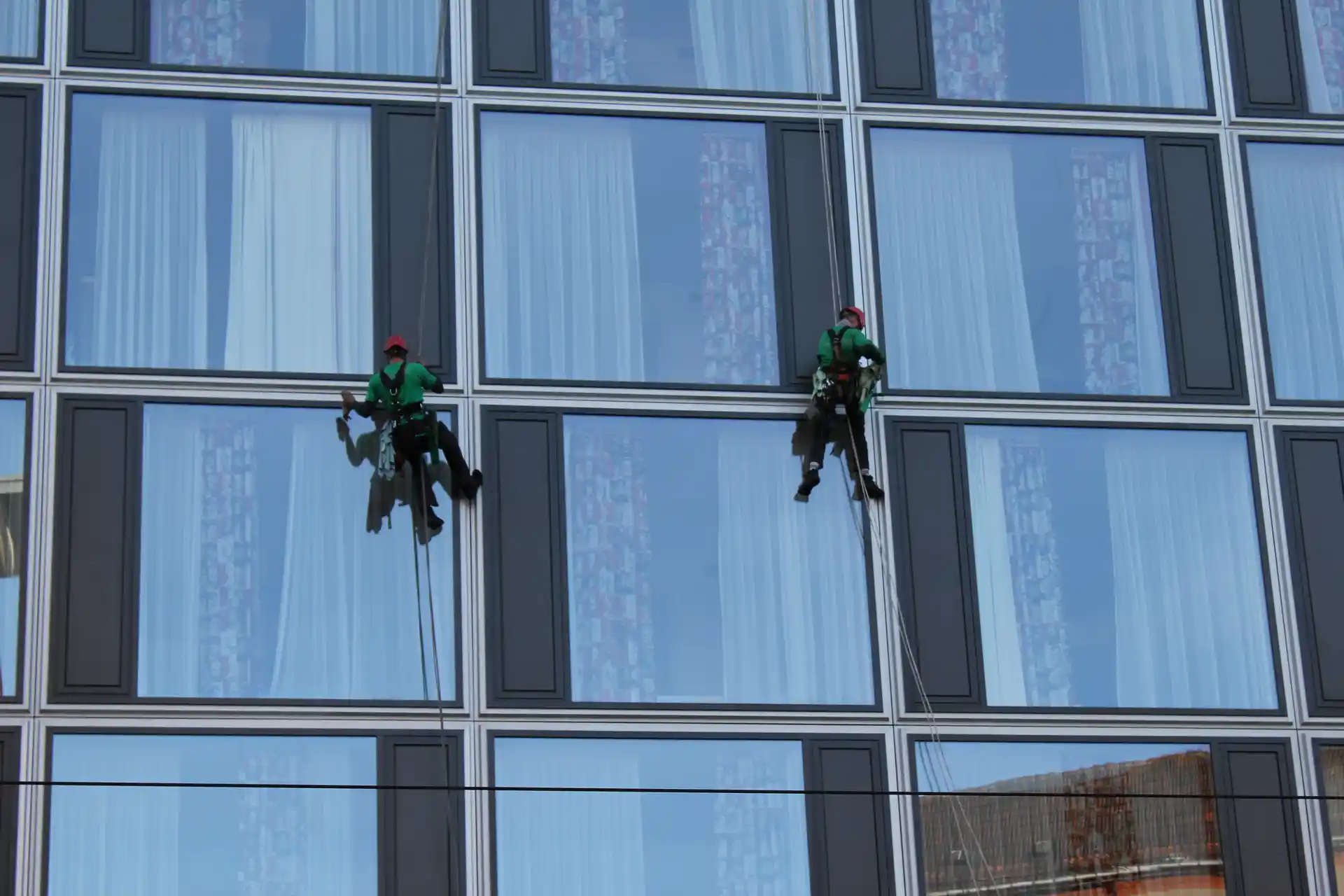
Aluminium cladding is one of the most common facade finishes on commercial buildings across Dubai. It’s durable, lightweight, and looks sharp when it’s clean. The problem is that cleaning it incorrectly causes more damage than leaving it dirty. If you manage a building clad in aluminium, there are a few things worth understanding before you call any facade cleaning contractor.
Why Aluminium Cladding Needs Different Treatment Than Glass
Glass cleaning and aluminium cleaning are not the same job. Glass is chemically neutral and can tolerate a wider range of cleaning agents with the right dilution. Aluminium is different. It’s alkali-sensitive. Highly alkaline cleaners, the type commonly used on concrete or hard staining, will react with the aluminium oxide layer and cause surface etching or discolouration.
That damage is permanent. It shows up as dull patches or uneven sheen across panels. Once it’s there, the only fix is panel replacement. That’s why choosing the right contractor matters from the start.
The Problem with Acid-Based Cleaners on Coated Aluminium
On the other extreme, some contractors use acid-based cleaners to cut through heavy soiling. Acid works fast and looks impressive on the first rinse. But it strips anodized finishes and degrades powder-coated and PVDF coatings over time.
Anodized aluminium has a protective oxide layer built into the surface through an electrochemical process. Acid strips it. Powder coating is a dry paint finish applied electrostatically and cured under heat. Acid weakens its adhesion. PVDF, which stands for polyvinylidene fluoride, is a higher-spec coating used on premium cladding systems. It’s the most durable, but it’s not immune to repeated acid exposure. That matters on any aluminium cladding cleaning Dubai job.
The right cleaner for aluminium cladding is pH-neutral or mildly acidic at very low concentrations, and it should be matched to the specific coating type on your panels.
How Oxidisation Builds Up in Dubai’s Climate
Dubai’s sun is intense. UV radiation breaks down the surface of unprotected or aging cladding finishes. Combined with the salt air that comes in off the Gulf, especially in Marina, JBR, and coastal towers along the waterfront, oxidisation is a real and ongoing problem.
Oxidisation on aluminium looks like a chalky white or grey film that won’t rinse off with water. It’s the breakdown of the protective coating. Left untreated, it exposes the base aluminium to further degradation. In industrial areas like JAFZA, pollution particles from shipping and heavy transport add a grimy layer on top of the oxidisation, making the facade look significantly older than it is.
A proper clean removes the oxidisation layer, slows further degradation, and in some cases, a light restorative polish can bring back the original sheen on older anodized panels.
How Aluminium Cladding Cleaning Dubai Should Be Done
Spring Blue has handled the work since 2017. Moreover, Dubai Municipality approves our methods. Our crews follow a written method statement. Supervisors then inspect every drop. Finally, you get a signed report. Therefore, nothing rests on a verbal promise.
Aluminium Cladding Cleaning Dubai: Coating Care
Costs depend on height, access and frequency. However, we quote only after a free survey. We measure the site first. Next, we agree the scope with you. Then we fix the price in writing. As a result, our clients see no surprise invoices.
Understanding the Three Main Aluminium Coating Types
- Anodized aluminium: Hard, integrated surface finish. Sensitive to both strong acid and strong alkali. Needs pH-neutral cleaning.
- Powder-coated aluminium: Paint-style finish. More tolerant than anodized, but repeated aggressive cleaning causes micro-cracking and colour fade.
- PVDF-coated aluminium: Premium fluoropolymer finish. Most durable. Still requires correct pH-matched cleaners and soft-wash approach.
Before any cleaning starts, a qualified contractor should identify which coating type your cladding has. If they don’t ask, that’s a warning sign.
What a Proper Aluminium Cladding Clean Looks Like
Here’s what a correct cleaning process involves, step by step.
- Pre-inspection of coating type and existing damage or staining.
- Pre-rinse with clean water to remove loose dust and surface particles.
- Application of pH-matched cleaning solution at correct dilution, allowed to dwell for the specified contact time.
- Soft agitation with non-abrasive pads or soft brushes. No wire wool, no abrasive sponges.
- Thorough rinse from top down to prevent cleaner residue drying on lower panels.
- Post-clean inspection to check for missed areas, streaking, or any surface reactions.
- Documentation with before-and-after photos for the building manager’s records.
That’s the process. Any shortcut on any of those steps creates a risk of damage or an incomplete result.
How Often Does Dubai Aluminium Cladding Need Cleaning?
It depends on location and exposure. Coastal buildings in Marina, JBR, and along the waterfront are exposed to salt-laden air year-round. Salt accelerates oxidisation and leaves white deposits on cladding surfaces. These buildings typically need cleaning every three to four months. This is where aluminium cladding cleaning Dubai differs from routine work.
Inland commercial buildings in Business Bay, Tecom, or Dubai Hills, with lower salt exposure but higher dust and traffic pollution, usually manage well on a twice-yearly schedule. Industrial units in JAFZA or Al Quoz, where pollution from vehicles and operations is heavier, often benefit from quarterly cleaning to keep the facade looking maintained and to protect the cladding coating from pollutant buildup. We see the same pattern on aluminium cladding cleaning Dubai projects across the emirate.
Work with a Contractor Who Knows the Material
The cheapest quote for aluminium cladding cleaning is rarely the right choice. The cost of a damaged panel replacement in Dubai starts at several thousand dirhams per panel for custom-coloured PVDF systems. A reputable contractor knows the chemistry, knows Dubai’s building stock, and won’t cut corners on chemical selection or application method.
We work on aluminium cladding across commercial towers, mixed-use developments, and industrial facilities throughout Dubai. If you’re not sure what coating your building has or what cleaning frequency is appropriate, we can visit, assess, and give you a straight recommendation with no obligation.
Call us on +971 4 343 2527 or WhatsApp us on +971 52 528 9713. We’ll assess your cladding and tell you exactly what it needs.
Aluminium Cladding Cleaning Dubai: What We Deliver
Our crews work to a fixed checklist. Consequently, every site gets the same standard.
Book Aluminium Cladding Cleaning Dubai Safely
Ready to move? We deliver this service for towers, offices, hotels and warehouses. Furthermore, every quote follows a free site survey. Our team replies within one working hour. We hold Dubai Municipality approval. Additionally, we carry full public liability cover. Since 2017 we have served more than 1,200 clients across the emirate.
Talk to our Dubai team today: WhatsApp +971 52 280 7364 | Call +971 52 280 7364 | Request a free site survey. Meanwhile, you can explore our our full range of services. Alternatively, see what our teams handle.