
Rope Access vs Cradle Systems for High-Rise Cleaning in Dubai: Which Is Better?
Cradle cleaning Dubai and rope access both reach a tower facade. However, they suit very different buildings. Cradles run on fixed rails, while ropes anchor at the roof. Therefore, the right choice depends on your structure. We compare both options honestly below.
If you manage a high-rise in Dubai, at some point you’ll need to decide how the external cleaning gets done. The two main options are rope access cleaning Dubai and cradle systems, also known as building maintenance units or BMUs. Both work. Both have their place. But they’re not interchangeable, and the right choice depends on your specific building. Here’s an honest breakdown of each.
What Rope Access Is and How It Works
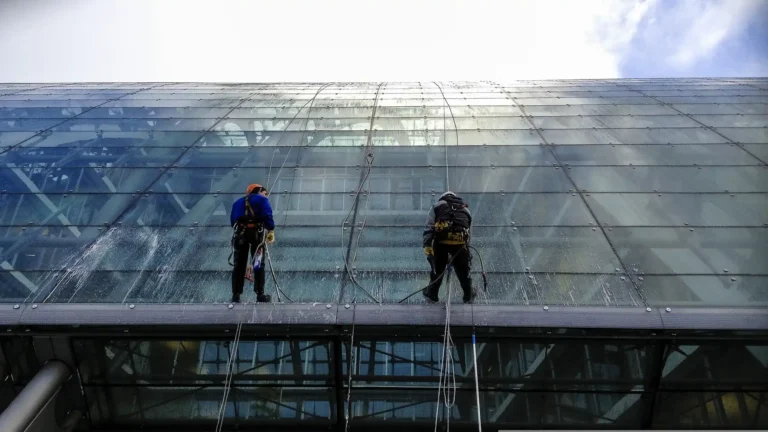
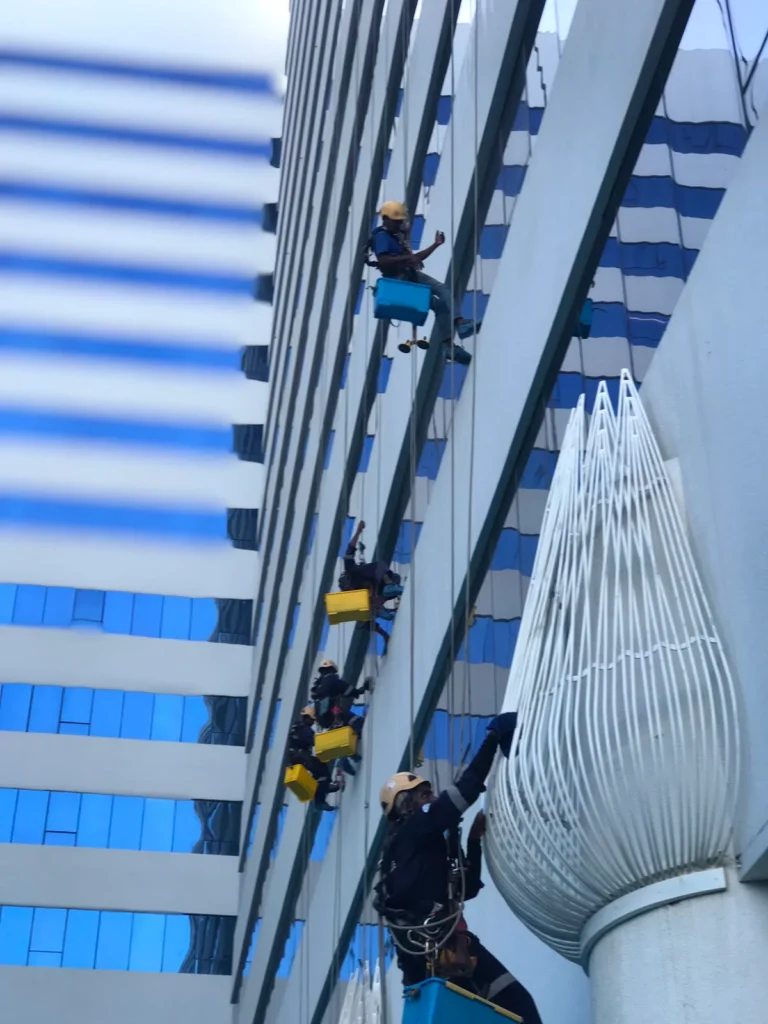
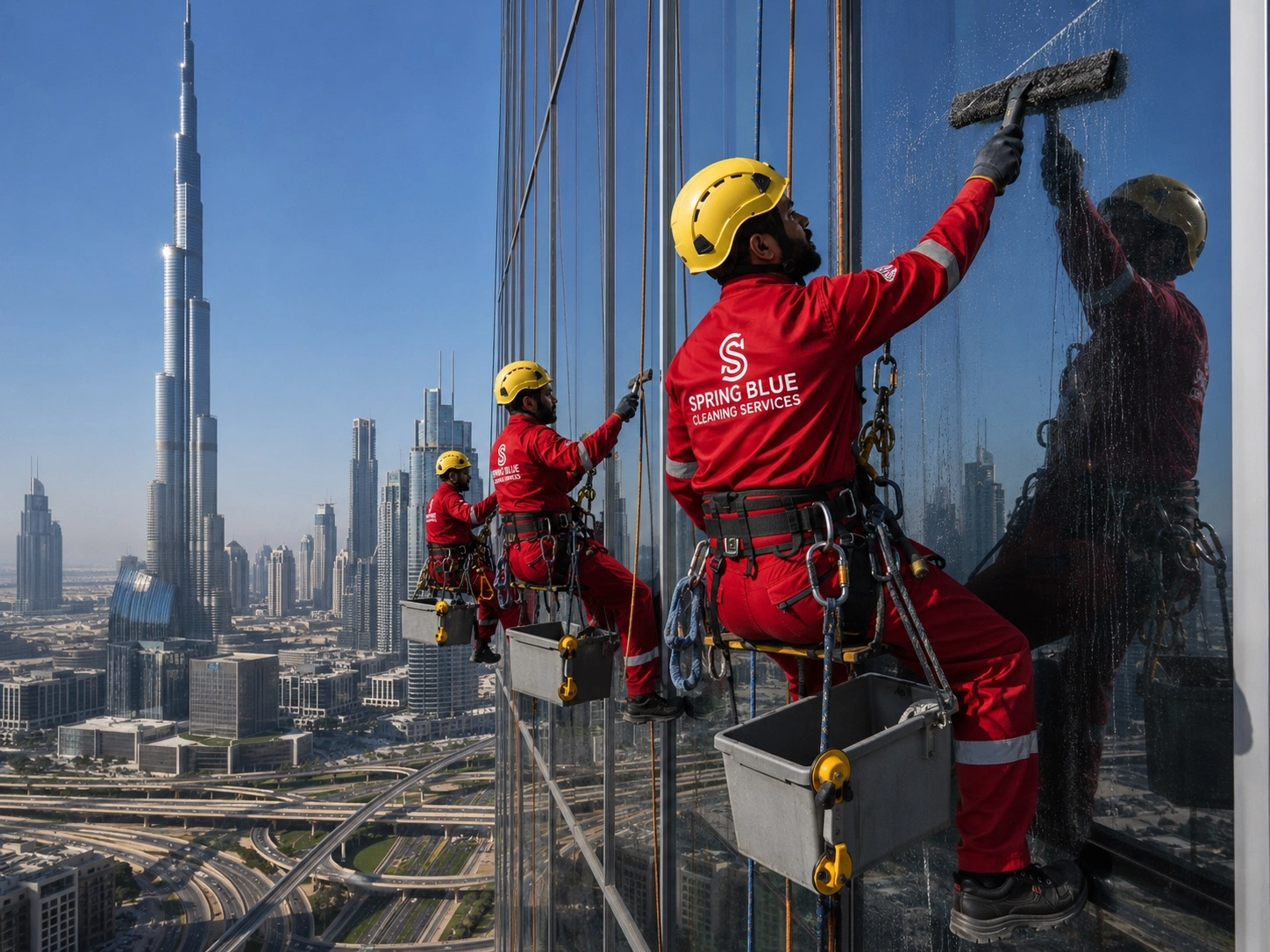
Rope access cleaning uses trained technicians who descend the building face on certified rope systems. Each technician works from two independent ropes, a working line and a safety line, anchored to certified points on the roof. They carry their cleaning equipment with them and work across the facade systematically, moving horizontally using controlled pendulum techniques. That matters on any cradle cleaning Dubai job.
IRATA certifies every rope access technician. IRATA stands for the Industrial Rope Access Trade Association. It’s the internationally recognised standard for rope access work. In Dubai, reputable rope access companies hold valid IRATA certification for their teams. That certification covers equipment inspection, work positioning, rescue procedures, and team supervision.
What Cradle Systems Are and How They Work
Cradle systems, or BMUs, are suspended work platforms. They’re typically built into the building at construction and run on rails or davit arms on the roof. The cradle lowers down the building face on wire ropes. Workers stand in the platform and clean as it travels down each drop zone.
Developers built modern towers in DIFC and Downtown Dubai with BMUs integrated into the roof design. You’ll see the cradle parked at the top of many landmark towers in those areas. For those buildings, the BMU is already there and is the natural first choice for routine cleaning. This is where cradle cleaning Dubai differs from routine work.
Cost: Rope Access Wins Clearly
Rope access is significantly cheaper than cradle cleaning in most scenarios. There’s no specialised equipment to hire, no crane to bring on site, and no need to book a BMU operator or maintenance engineer. The team arrives with their ropes, harnesses, and cleaning kit. Setup time is short. The labour cost per square metre of facade cleaned is lower across almost every building type.
Cradle system cleaning costs more because the equipment itself is expensive to operate and maintain. If the building’s own BMU needs servicing before the clean, that cost falls on the building. If you’re hiring a mobile elevated work platform instead, day rates are high and positioning limitations add time to the job.
Speed of Mobilisation: Rope Access Is Faster
Rope access teams can typically be on-site within 24 to 48 hours of instruction. There’s no equipment to book weeks in advance. No specialist logistics. The team shows up, confirms the roof anchors, and starts work.
A building’s own BMU usually needs unlocking, checking and unpacking before use. If nobody has operated the BMU recently, it may need a service inspection. That takes time. If you’re using a third-party cradle, booking windows depend on availability and site access scheduling. For urgent jobs, rope access is almost always faster to mobilise.
Cradle Cleaning Dubai Compared With Rope Access
Spring Blue has handled the work since 2017. Moreover, IRATA International approves our methods. Our crews follow a written method statement. Supervisors then inspect every drop. Finally, you get a signed report. Therefore, nothing rests on a verbal promise.
Cradle Cleaning Dubai: Cost Per Drop
Costs depend on height, access and frequency. However, we quote only after a free survey. We measure the site first. Next, we agree the scope with you. Then we fix the price in writing. As a result, our clients see no surprise invoices.
Which Buildings Have Built-In Cradle Systems?
Most high-specification towers built after around 2005 in Downtown Dubai, DIFC, and Business Bay were designed with BMU systems as a standard requirement. These buildings have roof infrastructure specifically for the cradle, including rail systems and designated storage bays. The Index Tower in DIFC is one example. Many of the grade-A office towers in Downtown operate their own BMUs.
Older buildings, residential towers in JLT or Marina built in the early 2000s, and most mid-rise commercial buildings in Tecom, Deira, or Al Quoz were not built with BMU systems. For these buildings, rope access is the practical answer for any work above the reach of cherry pickers or scaffolding.
Where Rope Access Is the Only Practical Option
Some buildings simply do not suit a cradle, whatever the preference. Irregular facades with projections, angles, or recessed sections don’t allow a cradle to travel cleanly down the face. Buildings without proper roof anchor infrastructure can’t support a BMU. Towers with narrow parapet edges or complex roofline designs make cradle deployment difficult or impossible. We see the same pattern on cradle cleaning Dubai projects across the emirate.
For these buildings, rope access technicians are the only team that can reach every part of the facade properly. Their ability to swing laterally and position precisely makes complex facades achievable. A cradle is essentially a vertical elevator. It can’t go sideways. Rope access can.
Safety: Both Are Safe When Done Properly
This is worth stating clearly. Both rope access and cradle systems are safe when operated by certified, trained professionals with properly maintained equipment. The risks come from cutting corners, using uncertified teams, or skipping equipment inspections, not from the method itself.
For rope access, IRATA certification is the benchmark. Ask any contractor for their IRATA documentation. If they can’t produce it, don’t hire them. For cradle work, the equipment should have current load testing certificates and the operators should be trained on that specific system. Experience with cradle cleaning Dubai points the same way.
Which Should You Choose?
If your building has a working BMU and the facade is straightforward, the cradle may be your best routine option. If your building doesn’t have a BMU, has a complex facade, or you need work done quickly and cost-effectively, rope access is probably the right call.
We work with both systems and we’ll tell you honestly which one suits your building. Our team never pushes rope access on every job. We recommend what actually works for the specific structure, facade design, and your budget.
Call us on +971 4 343 2527 or WhatsApp us on +971 52 528 9713. We’ll assess your building and give you a clear recommendation.
Cradle Cleaning Dubai: What We Deliver
Our crews work to a fixed checklist. Consequently, every site gets the same standard.
Still Weighing Cradle Cleaning Dubai Options?
Ready to move? We deliver this service for towers, offices, hotels and warehouses. Furthermore, every quote follows a free site survey. Our team replies within one working hour. We hold Dubai Municipality approval. Additionally, we carry full public liability cover. Since 2017 we have served more than 1,200 clients across the emirate.
Talk to our Dubai team today: WhatsApp +971 52 280 7364 | Call +971 52 280 7364 | Request a free site survey. Meanwhile, you can explore our our full range of services. Alternatively, see what our teams handle.